
Bariatric surgery is an effective and proven procedure for patients experiencing serious obesity and related health issues. When dieting and exercising have not worked, this weight loss surgery can lead to great and long-term success and enhanced quality of health. Regardless, it is important to understand the different procedures of bariatric surgery and the recovery before concluding. In this blog, we discuss the bariatric surgery procedure and recovery time.

Gastric-bypass Weight Loss Surgery Surgeon Bariatric Surgery Specialist
thesosaclinic.com
What is Bariatric Surgery?
Bariatric surgery is a surgical procedure designed to help patients with serious obesity and related health problems, such as diabetes, hypertension, heart disease, and sleep apnea. These procedures transform the digestive system to restrict food intake or calorie consumption.
There are many types of cutting-edge bariatric procedures, each has its advantages. These procedures are:
There are many types of cutting-edge bariatric procedures, each has its advantages. These procedures are:
Gastric Bypass
Gastric Bypass is one of the most commonly used bariatric procedures and is considered the gold standard for maximum weight loss. In this procedure, a small stomach pouch is created, which restricts food intake. Then, the small intestine is rerouted to link to the new stomach pouch, bypassing a portion of the digestive tract to facilitate nutrient consumption.
Gastric Sleeve to Bypass Conversion Procedure:
Although many patients successfully lose weight after the gastric sleeve procedure, many struggle to maintain it. If patients do not get the desired results, they should consider the conversion procedure of previously failed gastric sleeve to gastric bypass for better and longer-term outcomes.
Appointment Form
If you have an urgency, please call  (305) 558-0411. Your consultant will ensure that you receive the best attention.
Gastric Sleeve
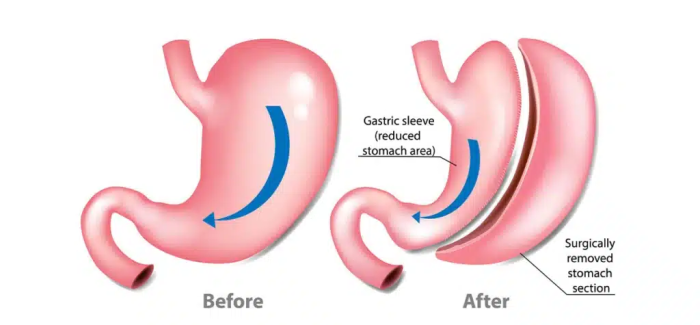
Almost 80% of the stomach is removed in the Gastric Sleeve, leaving a small, sleeve-shaped design. It lowers the stomach’s capacity for food intake and hunger to help control appetite.
The Bariatric Surgery Procedure: What Happens During the Surgery?
Bariatric surgery is conducted under general anesthesia, so patients are sleeping during the procedure. Most procedures use minimally invasive methods called laparoscopy, which involves small incisions and generally leads to faster recovery and less pain than normal open surgery.
Procedure Steps:
- Preparation: Before surgery, the doctor evaluates the patient’s different conditions, such as blood tests and imaging, and follows a special diet to prepare for surgery.
- Anesthesia: General anesthesia is used to keep patients asleep and pain-free.
- Incision and Laparoscopy: The surgeon makes small incisions in the abdomen and utilizes a special camera and minimally invasive devices to perform the surgery.
- Procedure Implementation: This part depends on the surgery; the surgeon creates a small stomach pouch, and removes a portion of the stomach. More complicated procedures may involve bypassing sections of the small intestine.
- Recovery in the Operating Room: Patients are observed in a recovery room after surgery as the anesthesia fades.
- Procedure Duration: The Bariatric surgery procedure generally takes only 45 minutes with Dr. Sosa given his incredible experience of over 20,000 Bariatric procedures.
Recovery After Bariatric Surgery
The post-operative recovery depends on different aspects, such as the type of surgery, the patient’s health, and commitment to post-operative guidelines. Although bariatric surgery provides great benefits, understanding the recovery procedure is necessary for successful weight loss without any difficulties.
Immediate Post-Surgery
After bariatric surgery, patients are closely observed in the hospital to ensure no immediate difficulties. The duration of hospital stay generally ranges from 1 to 2 days.
What to Expect:
- Pain and Discomfort: Mild pain and discomfort are expected after bariatric surgery, particularly in the abdominal area. It can usually be treated with prescribed pain medications.
- Nausea and Vomiting: Nausea is a common effect during the first few days after surgery as the body adapts to the new digestive system.
- Dietary Restrictions: Patients will be restricted to a clear liquid diet after the first few days of surgery. Over the period, patients will slowly change to soft foods and then solid foods.
- Mobility: Patients are motivated to do light physical activities after surgery to elevate circulation and control blood clots.
We offer both, Sleeve Gastrectomy and Gastric Bypass, depending on the patient’s needs.
We take into consideration your Body Mass Index, medical conditions, medical history and previous surgeries and together with the patient decide the appropriate procedure either Gastric Bypass or the Sleeve Gastrectomy.
Our package includes a 23 hour stay in a Joint Commission Accredited Hospital. However, if the patient requires another day of stay or two, that can be arranged.
We prefer you stay in town at least one week after Weight loss surgery to follow up with the doctor and nutritionist before you return home.
We want you active right away, walking immediately after surgery. You are usually driving five to six days after surgery and by a week, you will resume all normal activities and may go back to work depending on duties. At one month you will be given the green light to resume heavy lifting, rigorous exercise, joining a gym, sports, etc.
Although the risk is low there is a possibility of complications after Bariatric Surgery, less than three out of a hundred patients may experience a complication and these can include, bleeding, infection, and need for re-operation.
Weight loss can vary but on average patients undergoing the sleeve gastrectomy can expect to loose 60-80lbs. Patients undergoing gastric bypass will usually loose over 100lbs or 80% of their excess weight.
We see everyone in person for a one week follow-up visit with the doctor and the nutritionist. After this, the doctors’ visits are at one month, three months, six months, nine months and one year. If you are not in town these appointments can be virtual
Nutritionist visits could be done in person or over the phone and usually occur at one week, one month, 6 weeks, then can be customized to meet the patients needs as they advance their diet.
The average surgical time for a Gastric Bypass is one hour. The Sleeve Gastrectomy is somewhat shorter, about fifty minutes.
The Sleeve Gastrectomy is what we call a purely restrictive procedure. In other words, you will eat less food but you will continue to absorb the food and nutrients normally. That is why you tend to lose less weight than with a gastric Bypass.
The Gastric Bypass is a more aggressive surgery because there is a malabsorption component to the surgery, by bypassing a piece of the intestine sugar is not absorbed causing dumping syndrome(diahrrea) when you eat an excess of sugar. Total weight loss with the Gastric Bypass is significantly greater than with the Sleeve due to the malabsorption of sugar.
The Lap Band has been associated with long term problems such as erosion, slipped, dysphagia, reflux. Those problems are not present with the Sleeve, which results in a better weight loss than the Lap Band. So it is much better, and the surgeons have replaced the Lap Band with Sleeve, which is a more effective operation.
The Gastric Bypass is reversible because we have not removed any part of the anatomy, we have just bypassed a certain portion.
The Sleeve Gastrectomy is not reversable because we remove 80% of your stomach.
Both the Gastric Bypass and the Sleeve Gastrectomy are performed under general anesthesia. We have a very experienced anesthesia team that has done many operations.
We work with different medical finance companies to help you. We use a Financing Solutions. We also accept all major credit cards.
Patients meeting the criteria of a BMI greater than 40 are candidates for weight loss surgery. Also those patients with a BMI of 35 or greater can be a candidate for surgery if they suffer from a co-morbid condition. The most typical co-morbid conditions include diabetes, high blood pressure, high cholesterol, and obstructive sleep apnea.
Short-Term Recovery
After almost a week, patients are usually released from the hospital and resume their recovery at home. It is crucial to follow post-operative dietary guidelines and rest as much as possible during this time.
What to Expect:
- Dietary Progression: Patients can generally move from liquids to soft diets such as mashed potatoes and soups after the first or second week.
- Pain and Discomfort: The initial soreness is lessened daily as the incision heals.
- Energy Levels: Most patients feel less exhausted by the second week’s end, but avoiding overexertion is necessary.
Long-Term Recovery
After only 2-3 months of surgery, patients usually start to see rapid weight loss and redirect their focus to lifestyle changes for longer-term success.
What to Expect:
- Weight Loss: Many patients experience fast weight loss during this period, which will decrease over time.
- Dietary Habits: Patients should embrace a healthy diet and consult with their bariatric surgeon and nutritionist regularly.
- Exercise: More intense exercise, such as weight training and aerobic exercises, should generally be continued to help maintain weight loss.
Possible Complications During Recovery
While bariatric surgery is typically a safe procedure, it is necessary to be aware of possible difficulties, such as:
- Infections at the surgical site
- Vitamin deficiency, particularly in iron, vitamin B12, and calcium
- Gallstones, which can develop because of quick weight loss
- Blood clots or deep vein thrombosis.
In conclusion, bariatric surgery is a proven method for extreme obesity and related health issues. Knowing the procedures, surgery procedures, and recovery is necessary for longer-term success. By following dietary guidelines and adopting healthy lifestyle changes, patients can improve their weight loss journey and the quality of their lives.